Helping small businesses protect people, meet their duties and reduce risk
Clear, practical health and safety guidance for small and medium-sized businesses. From risk assessments and workplace policies to incident management and inspections, we help you understand what needs to be done and put effective arrangements in place.
SME Health & Safety Compliance Checklist
Use this checklist as a starting point to identify gaps in your workplace arrangements.
- Business responsibilities
We have identified the health and safety duties that apply to our business.
A responsible person has been appointed to coordinate health and safety.
Senior management actively supports health and safety.
Employees understand their own safety responsibilities.
Specialist or competent advice is obtained where necessary.
Health and safety is included in business planning and decision-making. - Health and safety policy
We have a written health and safety policy where required.
The policy is appropriate for the size and activities of the business.
It identifies management responsibilities.
It explains how employees are consulted and informed.
It is communicated to employees.
It is reviewed regularly and whenever significant changes occur. - Risk assessments
We have identified hazards in our workplace and work activities.
Risk assessments have been completed for significant risks.
Employees and relevant contractors have been involved where appropriate.
Existing controls have been recorded.
Further actions have been assigned to named individuals.
Completion dates have been set and monitored.
Assessments are reviewed after incidents, changes or new information.
Specific assessments are completed for vulnerable workers where relevant. - Workplace and equipment safety
Work areas are clean, orderly and adequately maintained.
Floors, stairs and walkways are safe and free from avoidable obstructions.
Lighting, heating and ventilation are suitable.
Electrical equipment and installations are maintained safely.
Machinery and work equipment are suitable and properly guarded.
Inspection, maintenance and servicing records are retained.
Employees receive instructions before using equipment.
Defective equipment is removed from use or clearly labelled. - Fire and emergency arrangements
A fire risk assessment has been completed where required.
Emergency procedures are documented and communicated.
Escape routes and exits are accessible and clearly marked.
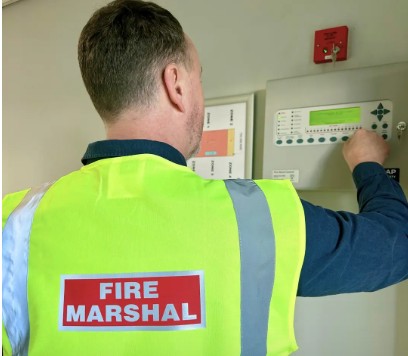
Fire alarms and emergency equipment are tested and maintained.
Emergency lighting is checked where required.
Employees know what to do in an emergency.
Evacuation arrangements consider visitors and people requiring assistance.
Emergency contact details are current.
Drills are carried out where appropriate and lessons are recorded. - Training and competence
New employees receive a health and safety induction.
Employees receive role-specific training.
Training is refreshed when necessary.
Supervisors and managers understand their responsibilities.
Employees are trained before carrying out unfamiliar or higher-risk tasks.
Competence records and certificates are maintained.
First-aid arrangements are suitable for the workplace.
Training needs are reviewed following incidents or changes. - Hazardous substances and exposure
Hazardous substances used at work have been identified.
Appropriate assessments and control measures are in place.
Safety information is available to employees.
Substances are stored, labelled and disposed of safely.
Suitable personal protective equipment is provided where required.
Exposure controls and equipment are inspected and maintained.
Health surveillance is arranged where legally or practically necessary. - Manual handling and physical risks
Manual-handling activities have been assessed.
Lifting, carrying and repetitive tasks are controlled.
Suitable handling equipment is provided where appropriate.
Employees are instructed in safe working methods.
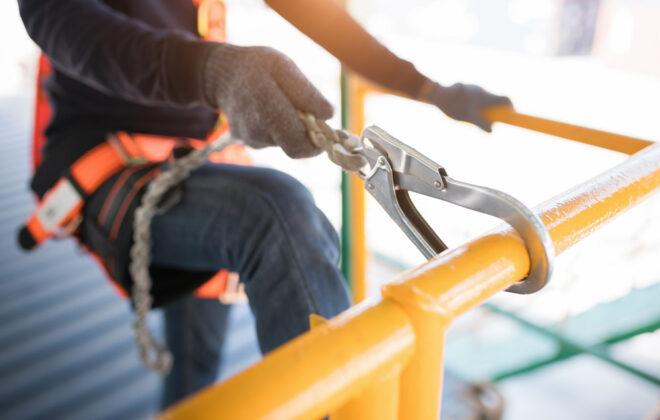
Working-at-height activities are assessed where applicable.
Ladders, platforms and access equipment are inspected.
Lone-working arrangements are documented where relevant.
Workplace transport and driving risks are managed. - Employee consultation and communication
Employees can raise health and safety concerns.
Safety information is communicated in a way employees understand.
Safety meetings, briefings or toolbox talks are held where appropriate.
Employees are consulted about significant workplace changes.
Suggestions and concerns are recorded and followed up.
Health and safety information is available to temporary workers and contractors. - Accidents, incidents and near misses
Employees know how to report accidents and near misses.
An accident and incident reporting process is in place.
Incidents are investigated proportionately.
Root causes and corrective actions are recorded.
Actions are assigned to named individuals.
Lessons learned are communicated to relevant employees.
Legally reportable incidents are reported to the appropriate authority.
Records are retained for the required period. - Contractors, visitors and suppliers
Contractors are selected based on suitable competence and experience.
Contractors provide relevant insurance and safety information.
Their work is planned and risk assessed.
Site rules and emergency arrangements are explained.
Contractor activities are monitored where necessary.
Visitors are signed in and given relevant safety information.
Deliveries and shared work activities are coordinated safely. - Monitoring and review
Workplace inspections are conducted regularly.
Legal and regulatory requirements are reviewed periodically.
Corrective actions are tracked through to completion.
Accident, absence and near-miss trends are reviewed.
Policies and risk assessments are reviewed after significant change.
Management periodically reviews overall safety performance.
Evidence of inspections, training, maintenance and reviews is retained.
Prioritisation guide
After completing the checklist, classify each item as:
Green: Arrangements are in place and working.
Amber: Partially complete or needs improvement.
Red: Missing, ineffective or presenting an immediate concern.
Address red items first, particularly anything involving imminent danger, fire safety, serious injury risks or legal reporting obligations.
Action plan
Issue identified Action required Person responsible Target date
Status
Important: This checklist is general guidance, not a guarantee of compliance. Businesses should check the requirements that apply in their jurisdiction and industry and seek competent professional advice for significant or complex risks.